Understanding the Critical Differences Between Razor Wire vs Concertina Wire
Release time:2026-02-03 Click:7
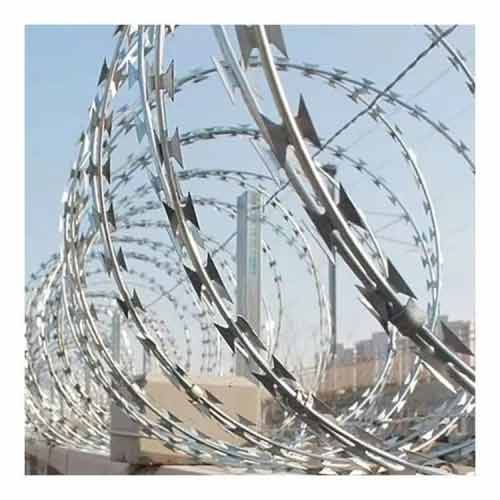
Though often used interchangeably in casual conversation, razor wire vs concertina wire represent distinct security technologies with unique geometries, deployment methods, and threat-level applications. Razor wire consists of a single strand of flat, sharp-edged steel tape with barbs punched at regular intervals, typically mounted on top of fences as a deterrent. Concertina wire, by contrast, is coiled into spring-like helices—either single or double-layered—that expand to form dense, entangling barriers capable of halting intruders mid-climb.
Concertina wire is pre-formed and deployed rapidly from rolls, making it ideal for military perimeters, riot control, or temporary high-security zones. Its three-dimensional structure increases contact points and psychological intimidation. Razor wire, while less obstructive, is cheaper and easier to retrofit onto existing chain-link or palisade fences. Both are usually made from stainless or galvanized steel, with blade thicknesses ranging from 0.5mm to 0.8mm and core wire gauges of 12–16.
Safety and legal considerations differ significantly: many jurisdictions restrict public-facing razor wire due to liability risks, whereas concertina wire is almost exclusively reserved for government or correctional use. Understanding the nuances between razor wire vs concertina wire ensures appropriate selection—not just for effectiveness, but for compliance, ethics, and proportionality in perimeter defense.
Previous article:Deploying Coiled Concertina Wire for Maximum Perimeter Deterrence
Next article:Enhancing Curb Appeal and Security with a Classic Picket Fence
Hot products
Mobile: +86 15369215227
Email:metalproducts2022@163.com
Email:1626757181@qq.com