Implementing Concertina Wire Fencing for Critical Facility Protection
Release time:2026-02-25 Click:9
The protection of critical infrastructure, high-security facilities, and vulnerable assets requires barrier systems that provide effective delay and deterrence against unauthorized access attempts. Concertina wire fencing represents one of the most effective physical security solutions available, with its razor-sharp blades and formidable appearance creating psychological and physical barriers that significantly increase the difficulty and risk of intrusion. Understanding concertina wire systems enables security professionals to implement appropriate perimeter protection measures for their specific operational requirements.
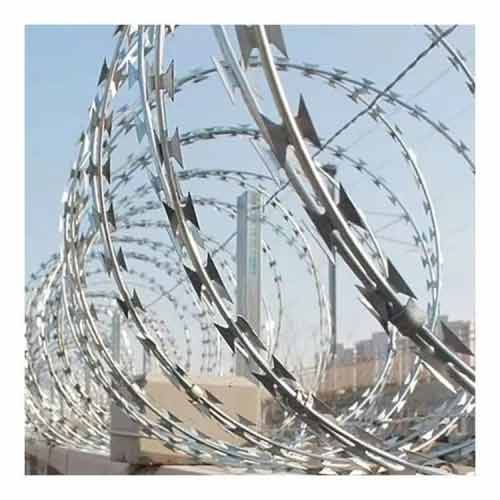
The design of concertina wire fencing incorporates multiple coils of razor wire that expand and contract like an accordion, creating a barrier that is extremely difficult to penetrate without specialized tools and significant time investment. The razor-sharp blades, typically manufactured from hardened stainless steel or high-carbon steel, maintain their cutting capability through years of outdoor exposure. The concertina configuration allows the barrier to be deployed rapidly from compact storage coils to expanded defensive arrays that can span significant distances. The interconnected blade pattern creates multiple cutting edges that catch and lacerate any material that attempts to pass through the barrier.
Material specifications for concertina wire fencing address the demanding requirements of outdoor security applications in various environmental conditions. Blade material options include stainless steel for maximum corrosion resistance, galvanized steel for economical performance in most environments, and coated variants for enhanced durability in coastal or industrial atmospheres. Wire core specifications determine the strength and recovery characteristics of the concertina coil, with high-tensile wire providing excellent shape memory and deployment characteristics. Clipping and mounting hardware must be corrosion-resistant and structurally adequate to withstand the forces generated during deployment and service.
Deployment configurations for concertina wire fencing adapt to different site conditions, security levels, and operational requirements. Single coil deployment provides basic perimeter marking and deterrence for lower-security applications. Double or triple coil configurations create layered barriers that significantly increase penetration resistance and delay time. Wall-top mounted concertina creates formidable barriers at building perimeters and wall tops where space constraints prevent ground-level deployment. Ground-level deployment with appropriate support structures creates wide, difficult-to-cross barriers for critical asset protection.
Perimeter security applications for concertina wire fencing span corrections facilities, military installations, electrical substations, and commercial properties requiring high-level security. Corrections and detention facilities utilize concertina wire as terminal and intermediate barriers that prevent escape attempts and unauthorized access. Military and government installations require concertina wire as part of layered security systems that protect classified information and critical assets. Utility and infrastructure facilities use concertina wire to protect expensive equipment from theft and vandalism while ensuring public safety.
Integration with electronic security systems enhances the effectiveness of concertina wire fencing in comprehensive security programs. Sensor systems detect disturbances to the wire, triggering alarms and initiating response protocols before physical breach occurs. Video surveillance systems provide visual monitoring of concertina zones, enabling verification of alarms and supporting evidence collection. Access control systems coordinate with physical barriers to manage legitimate access while maintaining security against unauthorized entry.
Regulatory and safety considerations affect the deployment of concertina wire fencing in various applications and jurisdictions. Warning signage is typically required to alert individuals to the presence of lethal barriers, reducing liability exposure while enhancing deterrent effect. Local ordinances may regulate or restrict the use of concertina wire in certain areas, particularly where it may pose risks to emergency responders or the public. Insurance requirements for high-value properties may mandate specific security measures, with concertina wire installation potentially affecting coverage terms and premiums.
Previous article:High-Security Perimeters: The Deterrence of Razor Concertina Wire
Next article:Enhancing Aesthetics and Security with Classic picket fence
Hot products
Mobile: +86 15369215227
Email:metalproducts2022@163.com
Email:1626757181@qq.com