Product details description
Temporary security barriers utilizing concertina wire systems provide
rapid-deployment protection for events, construction sites, temporary
perimeters, and security applications requiring immediate containment without
the permanent installation of fixed fencing. Concertina wire, also known as
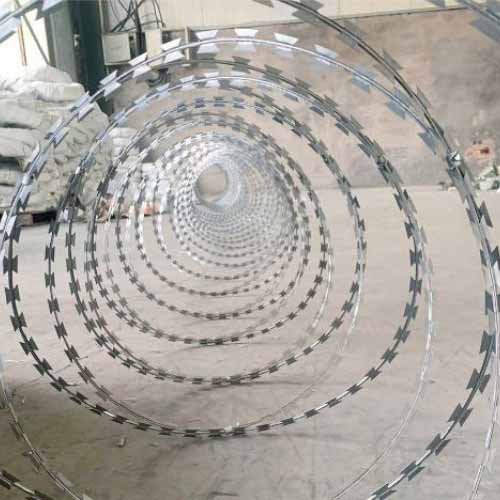
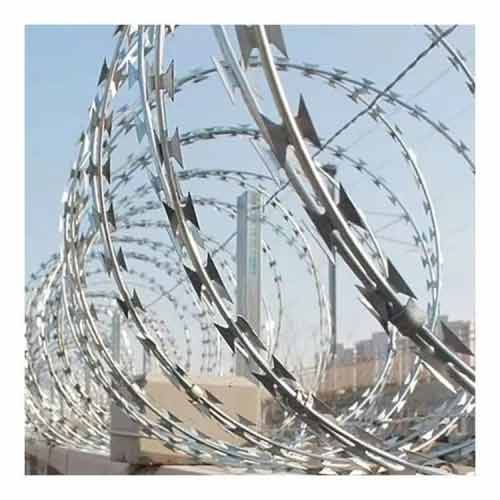
razor coil or barbed tape, consists of sharp-edged steel strips coiled into
configurations that expand and contract like an accordion, creating dense
barriers that are difficult to penetrate without significant time and effort.
Understanding the components, deployment methods, and tactical considerations
for temporary concertina barrier systems enables security professionals, event
managers, and facility operators to implement appropriate protection measures
for their specific security requirements. The versatility and effectiveness of
concertina barriers have made them standard tools for rapid security
establishment across diverse applications.
Concertina wire systems for temporary applications typically utilize
lighter-weight materials and specialized deployment equipment that allow rapid
setup and takedown while maintaining effective barrier properties. Standard
concertina coils for permanent installation may weigh 50 to 100 pounds per
meter, while temporary deployment systems often use lighter coils in the 25 to
40 pound range that can be carried and positioned by small teams. Wire
specifications for temporary applications typically use 18 to 24 gauge steel
with zinc or polymer coatings that provide adequate corrosion resistance for the
temporary deployment period. Barbed blade configurations vary from standard
four-point razor tape to more aggressive designs with additional cutting edges,
with selection based on the deterrent level required for specific security
applications.
Deployment procedures for temporary concertina barriers require proper
training and appropriate equipment to achieve effective barrier configurations
while minimizing the risk of injury to deployment personnel. Standard deployment
involves uncoiling the concertina bundle and expanding it to its full length,
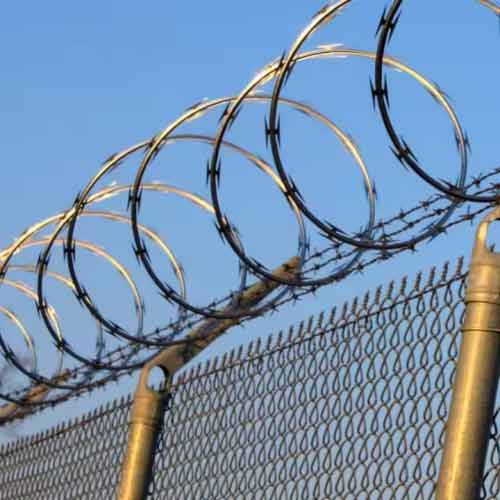
then positioning the expanded coil along the intended barrier line with support
stakes or anchors at regular intervals. The expansion process typically triples
or quadruples the compressed coil length, with a standard 50-meter coil
expanding to 150 to 200 meters of deployed barrier. Support stakes are driven or
placed at intervals of 5 to 10 meters, with the concertina wire clipped or wired
to stakes at multiple points to maintain barrier configuration. For higher
security applications, double or triple coil configurations can be deployed in
overlapping patterns that significantly increase barrier density and penetration
resistance.
Storage and transportation requirements for temporary concertina systems
address the specialized handling and logistics needs that these security
barriers create. Coils should be stored in dry conditions that prevent corrosion
of the steel components, with original packaging or designated storage
containers protecting coils from damage during storage. Transportation typically
requires secure, locked containers that prevent unauthorized access while
protecting coils from damage during movement between deployment locations.
Inventory management systems should track deployment status, condition, and
maintenance requirements to ensure that all components remain serviceable and
available when needed. Regular inspection of stored coils identifies any
corrosion, damage, or deterioration that could compromise barrier effectiveness
during deployment, with damaged components replaced or repaired before being
returned to serviceable inventory.
Previous article:
Concertina Wire Coating Options: Galvanized vs. PVC-Coated for Corrosion Resistance
Next article:
Galvanized Concertina Wire - Cost-Effective Long-Term Solution